Interviews with family business owners, family office executives, CIOs and trusted advisers, exploring succession, governance, wealth and legacy across generations.
Before asking who should succeed a family business, perhaps the more important question is why the business should continue. Lin Ruiwen, a second-generation member of Sheng Siong’s founding family, shares her perspectives on succession, family values and long-term business continuity.
Introduction
In Japan, discussions about family business succession often begin with inheritance tax, ownership transfers and identifying the next generation of leaders.
But before addressing these technical questions, families may need to consider something more fundamental: Why should the business continue, and must the next generation necessarily manage it?
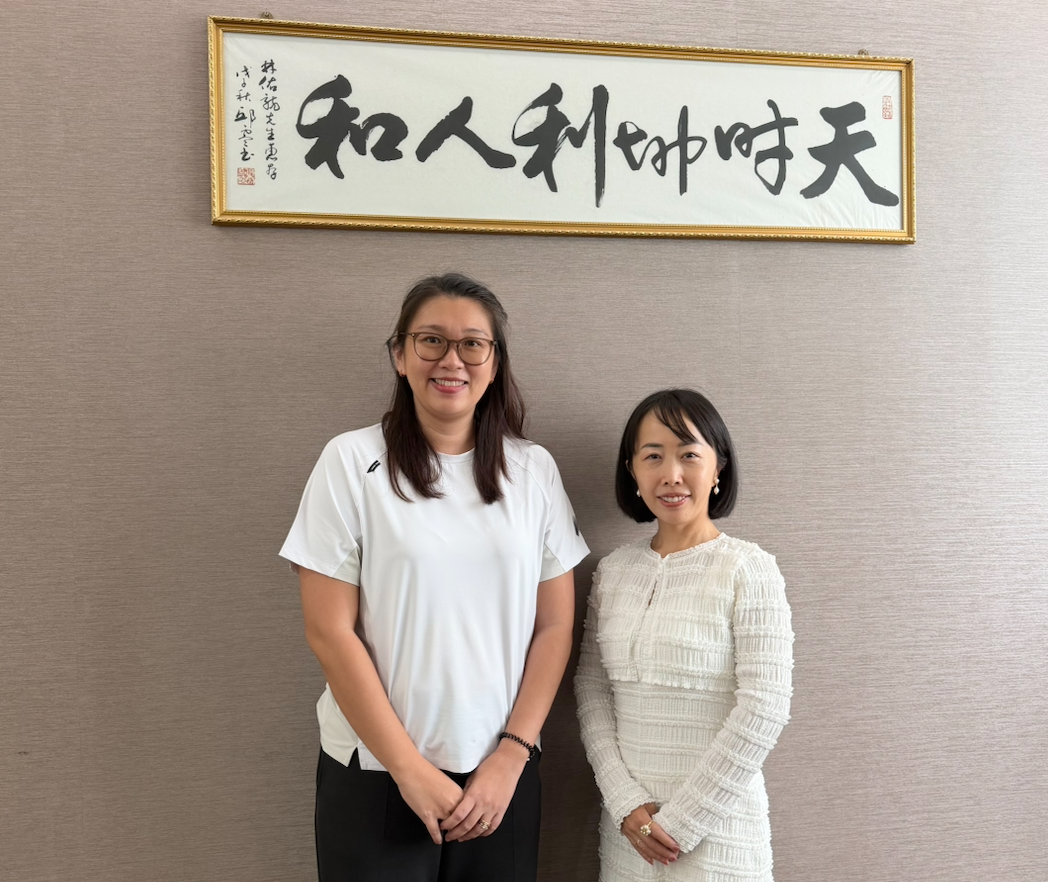
On 23 October 2026, Yoko Hanawa, Co-Founder of the Family Office Practitioners Association Japan (FOPAJ), interviewed Lin Ruiwen, Executive Director of Singapore-listed Sheng Siong Group(SGX: OV8)and a second-generation member of its founding family.
The conversation explored the family’s history, the next generation’s role in the business, communication among family members and the evolving purpose of business succession.
From Pig Farming to Supermarkets: The Founding Family’s Journey
Sheng Siong’s origins can be traced back to the founding family’s pig farming business.
As the Singapore government moved to phase out pig farming, Ruiwen’s father and his two brothers received seed funding from their father and transitioned into the supermarket business.
One of the brothers, Lim Hock Chee, and his wife had been selling pork from a rented section of a supermarket in Ang Mo Kio.
When the supermarket encountered financial difficulties, an opportunity arose to acquire and operate it.
Starting with a single store, the family gradually expanded the business.
The three founding brothers and their spouses worked together to build the company.
Ruiwen is the eldest grandchild of the second generation.
Before joining the family business, she worked outside the company and pursued further studies.
She joined Sheng Siong in 2009, initially working alongside her parents in the fruit and vegetable department.
Over time, she assumed responsibilities across different functions. Today, her work includes sustainability, investor relations, corporate affairs and strategic projects.
Being Part of the Family Does Not Guarantee a Leadership Position
When asked about succession, Ruiwen explained that the family has never assumed that the next generation must automatically take over the business.
What matters is whether an individual has the capability and willingness to contribute to its success.
Interestingly, when the second generation was younger, the founders discouraged their children from joining the business.
Having experienced the hardships of establishing the company, they did not want their children to go through the same difficulties.
Nevertheless, the younger generation had witnessed their parents’ dedication and hard work.
They developed a desire to contribute to the business, provided they had the ability to add value.
Ruiwen emphasised that being the child or grandchild of a founder does not entitle someone to a position in the company.
Family members should not expect special privileges. They should demonstrate the same professionalism, commitment and responsibility as other employees.
Family membership and suitability for management are not necessarily the same thing.
Family Disagreements Can Be Part of Building a Better Business
Working with relatives across generations inevitably brings differences of opinion.
Ruiwen acknowledged that discussions and disagreements occur among her father, uncles, cousins and other family members involved in the business.
However, she explained that such disagreements are not necessarily personal conflicts.
Rather, they often arise because family members share the same goal but have different ideas about how best to achieve it.
Communication is therefore essential.
Over time, family members learn to understand one another’s personalities, temperaments and preferred ways of communicating.
Ruiwen also described the importance of personal development within the family.
The founders encouraged the next generation not only to focus on business performance but also to reflect on their own behaviour and strive to become better individuals.
How someone responds to complaints, difficult situations and interpersonal challenges matters.
In her view, personal growth contributes to stronger relationships and ultimately a better organisation.
For family businesses, this offers an important lesson: the objective is not necessarily to eliminate disagreements, but to manage them constructively around a shared purpose.
The Purpose of a Family Business Evolves Over Time
One of the most memorable parts of the interview concerned the purpose of business succession.
In Japan, succession discussions often begin with tax planning, inheritance and the transfer of family-owned shares.
Hanawa suggested that families should first consider their broader long-term objectives before focusing on technical solutions.
Ruiwen responded that, based on her own experience, succession ultimately comes back to the family’s purpose.
When the three brothers started the supermarket business in the 1980s, their primary motivation was survival.
The family could no longer continue pig farming and needed a new source of income.
At that time, the purpose of the business was straightforward: to earn a living and support the family.
As Sheng Siong grew, however, its responsibilities changed.
Today, the company has approximately 4,200 employees.
These employees have families to support, personal ambitions and livelihoods that depend on the company’s continued success.
Ruiwen explained that the founding family has moved beyond the stage where its members need to work simply to survive.
The question is therefore why the family continues to operate the business.
For her, a central purpose today is to take care of employees and help them build fulfilling lives.
As the business grows, its decisions affect more people, creating greater responsibilities for those who lead it.
This sense of responsibility motivates her to continue working to sustain and develop the company.
From Family Succession to Business Succession
Ruiwen also challenged the assumption that succession must necessarily involve handing management to another family member.
The most important consideration is finding people who share the company’s purpose, mission and values.
Those individuals could be family members, external professionals or a team of capable people.
Family members may also choose to remain shareholders without holding management positions.
In other words, family ownership and family management do not always have to go together.
Rather than focusing exclusively on which family member should inherit the leadership role, Ruiwen encouraged a broader approach to business succession.
The priority should be identifying the people best equipped to carry the company’s legacy and purpose forward.
When the right team shares a meaningful purpose, different ways of sustaining and growing the business become possible.
In Ruiwen’s view, financial success can follow as a by-product of pursuing that purpose effectively.
Implications for Family Offices: Passing On Purpose Before Wealth
Family offices are often associated with investment management, tax planning, estate planning, trusts and wealth preservation.
These functions are important, but long-term family continuity also requires clarity about what the family wishes to preserve and pass on.
The Sheng Siong interview offers several broader lessons.
First, the purpose of a family business may evolve over time. What begins as a means of supporting the founding family may develop into an organisation with responsibilities towards employees, customers and the wider community.
Second, succession does not necessarily require the next generation to assume management responsibilities. Family members may lead the business if they are capable and willing, while professional managers may be better suited in other circumstances.
Third, shared values and a common purpose help families navigate differences of opinion and make decisions about the future.
These are lessons FOPAJ draws from Sheng Siong’s experience, rather than descriptions of a formal family office structure adopted by the company.
For Japanese business-owning families, discussions about succession frequently involve taxation, ownership structures and inheritance planning.
Yet before deciding on these mechanisms, families may benefit from asking more fundamental questions.
What does the family want to preserve? Why should the business continue? And who is best placed to carry that purpose forward?
The interview was a reminder that succession is not simply about transferring shares or management authority.
It is also about passing on the values and purpose that give the business meaning.
Before deciding who should inherit the business, families should consider why the business should continue.
Sheng Siong’s experience offers a valuable perspective for families seeking to sustain both their businesses and their legacy across generations.
Interview date: 23 October 2026
Interviewee: Lin Ruiwen, Executive Director, Sheng Siong Group
Interview and article: Yoko Hanawa, Co-Founder, FOPAJ
This article has been condensed and adapted from an interview transcript reviewed by the interviewee, focusing on family values and business succession. The family office implications reflect FOPAJ’s editorial analysis.