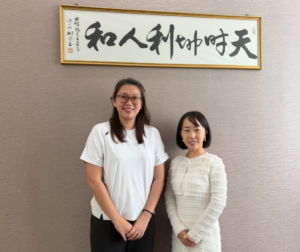
On September 24, 2026, I attended the NextGen Private Banking Summit – Singapore at Raffles Hotel in Singapore.

At the event, WealthSummit presented the findings of its latest study, Shaping the Future of Wealth Management: NextGen Private Banking Clients 2026 – Singapore Edition.
The study surveyed 1,049 NextGen wealth holders, prospective heirs, entrepreneurs, and others in Singapore and Southeast Asia. As intergenerational wealth transfers gather pace globally, it examines how next-generation wealth holders choose financial institutions and advisers and what they expect from wealth management.
In this study, “NextGen” does not refer only to younger people in their twenties and thirties. It broadly encompasses Gen X, Gen Y, and Gen Z—those who will inherit and manage wealth in the years ahead.
The findings point to more than a simple shift toward digital preferences among younger generations.
Rather than simply staying with the banks used by their parents, a growing number are combining multiple banks, independent asset managers, family offices, and digital services.
This article highlights the findings presented at the event that are particularly relevant to family office practice.
Contents
- Seventy-One Percent Use a Different Bank from Their Parents
- From a Private-Bank-Only Model to a Financial Ecosystem
- Interest in a Second Residence or Passport—From Concentration to Multiple Bases
- Routine Tasks for AI, Critical Decisions for People
- Broader Investment Opportunities—Seventy Percent Want Access to Private Markets
- Eight Elements the Next Generation Expects from Private Banks
- Recommendations for Bank Executives—Make Pricing and People the Top Priorities
- FOPAJ’s Perspective—From Choosing a Bank to Designing an Ecosystem
Seventy-One Percent Use a Different Bank from Their Parents
One of the most striking findings concerns the relationship between the banks used by NextGen clients and those used by their parents.
Seventy-one percent of respondents said they use a different bank from their parents. Among those with more than USD 50 million in assets, the proportion rises to 85%.
By generation, the proportions using a different bank from their parents were as follows:
- Gen X: 68%
- Gen Y: 74%
- Gen Z: 86%
The younger the generation, the higher the proportion.
In addition, 68% of respondents use three or more banks, while only 12% use a single bank.
This suggests that even when wealth passes from parents to the next generation, the parents’ relationships with financial institutions do not necessarily transfer with it.
This is an important challenge for private banks seeking to maintain client relationships across generations.
From a Private-Bank-Only Model to a Financial Ecosystem
Another notable finding concerns the range of financial services and institutions that NextGen clients are considering.
In the study, 20% of respondents regarded a private bank as their first choice. Among those with more than USD 20 million in assets, the figure was 12%.
The alternatives to private banks under consideration included:
- Independent asset managers: 42%
- Family offices: 39%
- Online banks / neobanks: 33%
- Robo-advisors / platforms: 32%
- Investment clubs: 23%
- Digital asset banks / platforms: 16%
The high ranking of independent asset managers and family offices is particularly noteworthy.
This does not mean that private banks are becoming unnecessary.
Rather, clients appear to be broadening their choices and combining private banks, independent asset managers, family offices, and digital services according to their objectives instead of relying on a single financial institution for everything.
Interest in a Second Residence or Passport—From Concentration to Multiple Bases
The preference for diversification extends beyond investment management to places of residence.
The study found that 60% of respondents want a second residence or passport. The figure ranges from 55% to 62% across wealth tiers, indicating that this is not confined to any single wealth segment.
A comparison of locations considered attractive today and five years from now shows the following changes:
| Country / Region | Today | In Five Years |
| Singapore | 71% | 51% |
| Switzerland | 56% | 45% |
| United Kingdom | 22% | 16% |
| Malaysia | 18% | 25% |
| Dubai | 16% | 21% |
| Thailand | 9% | 24% |
| Abu Dhabi | 9% | 23% |
| Portugal | 9% | 18% |
This does not mean that Singapore and Switzerland will cease to be important.
What is notable is the growing preference among NextGen clients to maintain options across multiple countries and regions instead of concentrating their lives, assets, and businesses in a single country.
This shift also matters to family offices. It suggests a growing need to address not only investment management but also residence, international taxation, legal matters, education, and business succession on a cross-border basis.
Routine Tasks for AI, Critical Decisions for People
NextGen is often portrayed as a generation that wants every service to be fully digital. The study, however, presents a more nuanced picture.
Primary Preference for AI
- Everyday banking: 77%
- Portfolio monitoring: 70%
- Investment research: 56%
Primary Preference for Human Advisers
- Holistic view of wealth and comprehensive financial decisions: 63%
- Tax and legal matters: 80%
- Wealth planning: 89%
In other words, NextGen clients are not simply shifting from people to AI.
They use AI for routine tasks and information processing while looking to human professionals for complex and consequential decision-making involving wealth succession, tax and legal matters, and wealth planning.
Rather than making human advisers unnecessary, the spread of AI may be changing the role expected of them.
Broader Investment Opportunities—Seventy Percent Want Access to Private Markets
The study also produced notable findings on the investment opportunities clients want financial institutions to provide.
Respondents wanted access to the following:
- Private markets: 70%
- Club deals: 51%
- Hedge funds: 33%
- Gold and precious metals: 24%
- Digital assets and decentralized finance (DeFi): 22%
The fact that 70% want access to private markets is particularly significant.
The findings indicate that access to private markets, including private equity and private credit, is becoming increasingly important in NextGen investment management alongside listed equities and bonds.
It is also noteworthy that the 22% seeking access to digital assets and DeFi is close to the 24% seeking access to gold and precious metals.
These figures do not indicate the future investment performance of any asset. They should be understood solely as survey results concerning the forms of access NextGen clients want from financial institutions.
Eight Elements the Next Generation Expects from Private Banks
What, then, do next-generation clients expect from private banks?
The presentation identified the following eight elements of a next-generation private bank:
- One Clear Fee — A clear, easy-to-understand fee structure
- Network Bank — A bank that can work with external networks
- Across Generations — Client service that spans generations
- AI Efficiency, Human Judgement — A combination of AI efficiency and human judgement
- Advisor Continuity — A continuing relationship with the client’s adviser
- Borderless Banking — Financial services across borders
- Full Asset Access — Access to a broad range of asset classes
- Total Wealth View — A consolidated view of total wealth across financial institutions
The presentation used the phrase:
“Clients want all eight—seven is not enough.”
The message is that digital capabilities, a broad product range, or a highly capable adviser is not sufficient on its own.
Clients expect an integrated offering encompassing pricing, service, technology, people, and investment access.
Recommendations for Bank Executives—Make Pricing and People the Top Priorities
The study concluded with seven actions for private bank executives.
Priority 1
- Publish One Price — Make the fee structure transparent
- Re-allocate Hours to Clients — Increase the time advisers spend with clients
Priority 2
- Book Where the Client Lives
- Lower the Ticket
- Own the Relationship
Priority 3
- Re-profile the Advisor
- Own the Network
What is interesting is that although the study addresses AI and digitalization, its highest priorities were pricing transparency and time spent with clients.
The message can be read as follows: the more advanced technology becomes, the more important it is to streamline routine work and redirect the time saved toward client dialogue and complex judgement.
FOPAJ’s Perspective—From Choosing a Bank to Designing an Ecosystem
The most important point in this study is not simply that next-generation wealth holders are choosing different banks from their parents.
Sixty-eight percent of respondents use three or more banks, and they are also considering independent asset managers, family offices, and digital services.
This points to a shift away from consolidating asset administration with a single financial institution and toward combining multiple financial institutions and professional advisers.
This shift is also important when considering the role of a family office.
A family office does not necessarily need to provide every service internally. Its increasingly important role is to combine the expertise of private banks, independent asset managers, lawyers, tax advisers, investment professionals, and others while maintaining an overall view of the family’s assets, businesses, succession, and places of residence.
The same applies to AI.
As AI makes routine work such as information gathering and monitoring more efficient, human professionals will increasingly need the ability to exercise judgement across multiple fields and connect the family with the right specialists when necessary.
The study indicates that succession to the next generation may become an opportunity not merely to transfer assets but also to reconsider the family’s relationships with financial institutions and advisers.
As generational change progresses in Japan, the key question for financial institutions and family office practitioners will not be limited to which financial products they offer. They will also need to determine how to build long-term relationships with families, including the next generation, and how to connect them with the financial institutions and professional advisers they require.
Sources and References
WealthSummit, Shaping the Future of Wealth Management: NextGen Private Banking Clients 2026 – Singapore Edition